
The Future of Payments
How to protect payments platforms from the surge in online fraud







The payments market is rapidly expanding across the globe, offering diverse options in everything from peer-to-peer (P2P) payments to remittances. Unfortunately, this success has made the sector a huge target for fraudsters.
There’s no doubting the huge value of the payments business today - and it’s only set to expand. Industry analysis suggests a transaction value of almost $16.7 trillion in 2028, up from $12.3 trillion in 2025.
As always, fraudsters are following the money. Our analysis of Veriff customer data found a shocking 89% jump in attempted fraud in the sector, shifting it from a moderate to a high-risk sector. Much of this has been driven by an increasingly sophisticated threat from AI and digitally manipulated media, which has helped fuel the rise of impersonation fraud.
Against this backdrop, it’s vital that payments providers adopt the right security tools to protect their customers - and themselves.
This isn’t just a ‘nice-to-have’, but a core customer demand; indeed, our data show that 82% of consumers think it’s important that robust IDV technology is utilized in financial services, including payments.
And it’s a legal necessity. Payments providers operate in an increasingly complex regulatory landscape, required to adhere to such powerful legal frameworks as the US Bank Secrecy Act and the EU’s GDPR.
This report summarizes some of the key findings and themes from our in-depth research into payments-related fraud. The key resources in focus are our Identity Fraud Report 2026, which offers extensive analysis of our global customer data throughout 2025; our Fraud Industry Pulse Survey, which covers the views of key fraud decision-makers; and the Fraud Index 2024, based on interviews with consumers.
Introduction

Ira Bondar-Mucci
Fraud Platform Lead, Veriff
But with the right AI-powered IDV and biometrics, payments can be secured against even the most sophisticated fraudsters.
Veriff’s capabilities empower payments providers to answer three crucial questions:
1
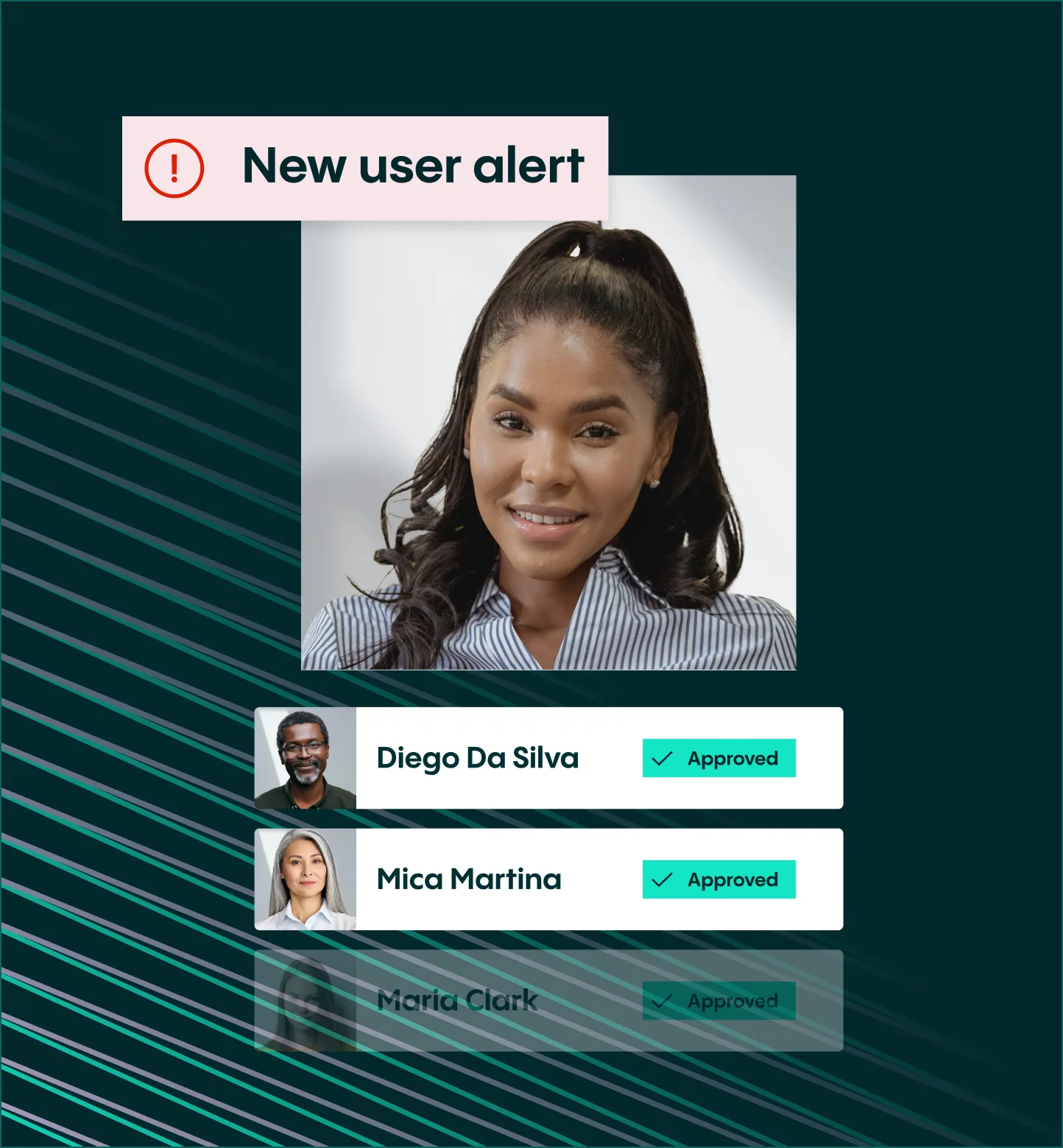
Is your customer/employee real?
Through a photo of their government-issue ID and a simple selfie, we can tell immediately if something is wrong with an image or video. We can detect liveness and realness without asking users to move unnaturally or follow complex instructions - in other words, we can ensure they really exist and that they are who they claim to be.
2
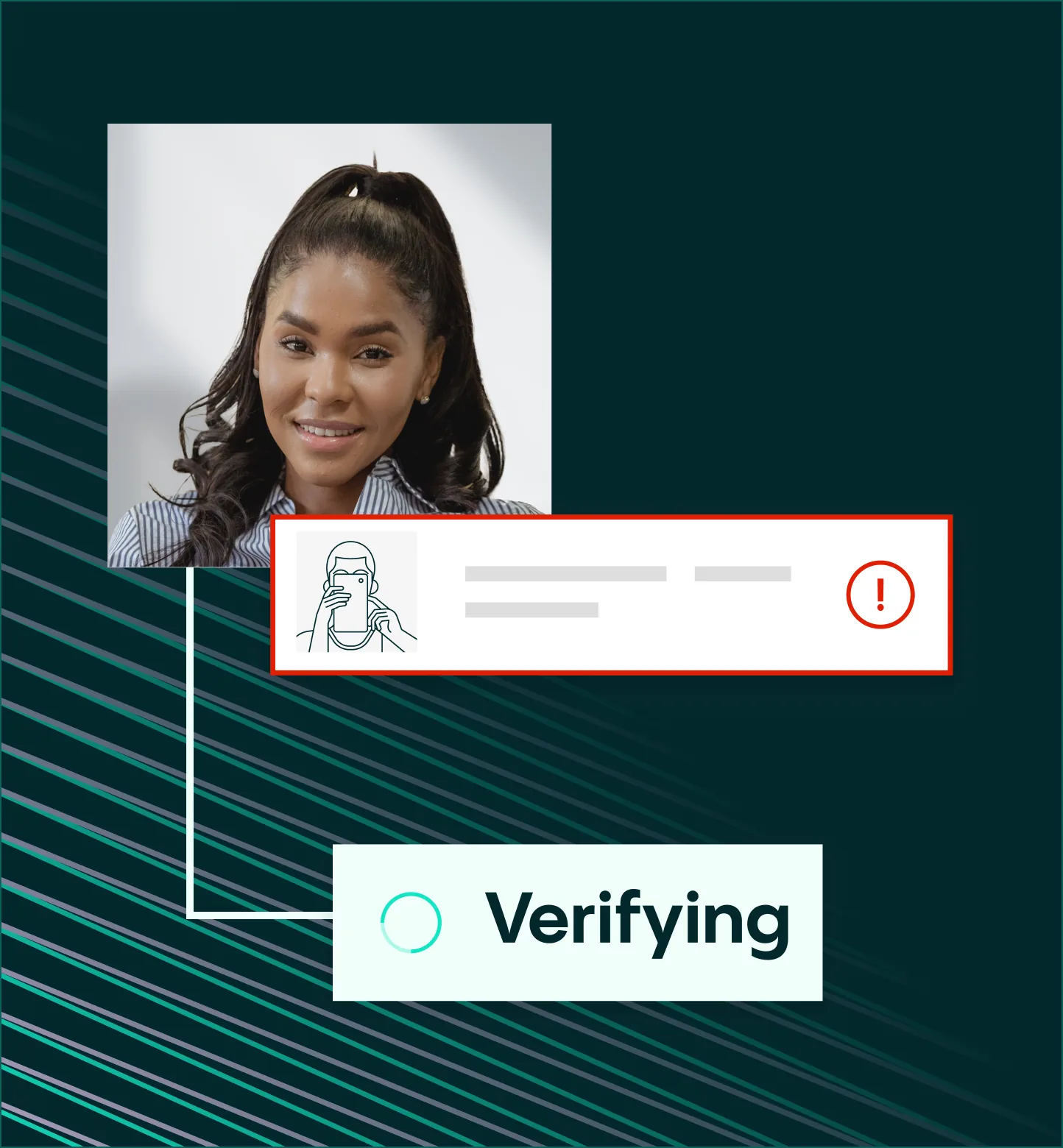
Is this customer/employee of value to you or a potential cost?
We can determine at the onboarding stage if the person is a potential customer of value - or if they simply cannot be trusted. With our cross-linking capabilities, we take huge amounts of data and search for patterns, helping us identify potential fraudsters who target certain industries. Of course, if they’re a legitimate customer, the process is smooth and safe, building security - and your company’s reputation.
3
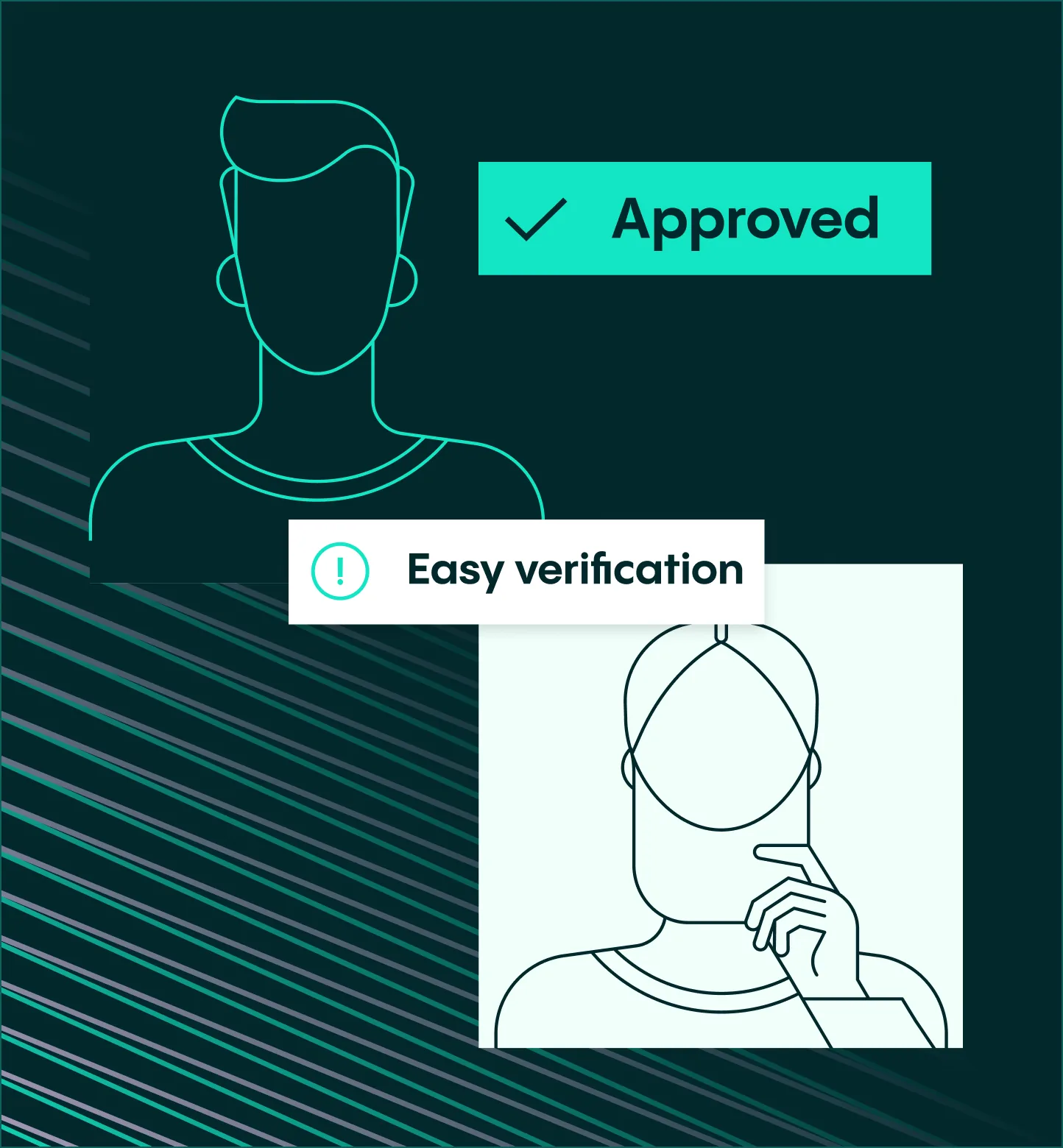
Is the answer to those questions still the same on an ongoing basis?
Can you ensure that users of your platform are who they say they are every time they engage with your platform? Reauthentication of customers and employees is absolutely critical. With biometric authentication, users are promptly and securely authenticated across all stage of their user journey. We know they are who they say they are because we can quickly check the information already on file.
In this report, we’ll outline the current state of the fraud threat for payments - and how providers can fight back.
PART 2
Key takeaways
PART 3
The fraud threat for payments
Payments face a growing threat from fraud
Fraud remains a consistent and persistent threat in financial services overall, with a net fraud rate of 5.5% in 2025. But even against this backdrop, the rate of growth in payments is truly astounding, according to the findings of our Identity Fraud Report 2026:
89%
Growth in the attempted fraud rate in payments sector in 2025.

What was behind this huge rise?
Overwhelmingly, it was due to attempts to submit digital media that had been AI-generated, digitally manipulated or otherwise altered. Sophisticated fraud attempts increased 3.6 times in under a year.
This helped fuel impersonation fraud, which dominated the attacks we saw in the area, though document fraud also made up a significant minority.
Payments
Impersonation fraud
Document fraud
Scams and other
Hover over the graphs to see the % of each fraud type
Impersonation fraud
In this form of identity fraud, a person pretends to be someone else to fraudulently access or apply for a digital account or service.
Document
fraud
When a document’s data is physically altered or a counterfeit document is fabricated from scratch.
A growing problem for fraud professionals
The expanding danger was also reflected in our US Fraud Industry Pulse Survey 2025. This surveyed fraud decision-makers at businesses with more than 100 employees or revenues over $100 million, including firms in the payments sector.
Given the size of the organizations involved, the financial consequences of a successful attack are obvious. And the fraud experts painted a worrying picture.
Importantly, this is a global problem. Our research found similar results among UK (72.5%) and Brazilian (70%) decision-makers.
72%
Decision-makers who saw an increase in online fraud in the previous 12 months

A devastating financial impact
It’s clear that fraud poses a major financial threat, but what does this mean in real terms? Unfortunately, there is clear evidence of significant financial damage: we found that the vast majority of businesses have seen their revenues fall due to fraudsters.
Almost a third (32%) reported a 3-5% reduction - for a business with revenue of $1 million, that could mean a loss of $50k per year, just to fraudsters. Many payments providers fall into this category.
Strikingly, a combined 13.5% of respondents have suffered reductions ranging from 10% to more than 20%, devastating numbers for any business. That’s even worse than last year’s survey, when just 1% of respondents cited a hit of more than 9%.
But the impact could be significant even for those further down the scale. For instance, about a third (32%) of US respondents say they’ve suffered a 3-5% reduction. For an organization with revenue of $1 million dollars, that could mean losing $50k per year - just to fraudsters.
75.5%
Businesses that saw a negative impact on revenue due to fraud

Hitting consumers in the pocket
This has financial consequences not just for payment specialists, but for their customers, with all the reputational and business damage that entails. Our Fraud Index 2024 - which interviewed 1,000 consumers across the US and UK - found that almost half of respondents had experienced such activity in the previous year, including when it comes to payments.
And it’s hitting them in their pockets, with a third of US suffering at least some financial loss and a quarter in the UK. Among US respondents, 1% reported losing more than $1,000. Consider the implications if 1% of consumers in the world’s largest economy are losing $1,000+ to fraud online every year - it could represent upwards of $3.5bn lost to fraud.
48%
Respondents who encountered fraudulent or suspicious activity in the last 12 months.

Payments are a crucial aspect of the modern digital economy. We need to ensure they’re safe, or the financial consequences could be devastating.

Ira BondAr-Mucci, Fraud Platform Lead, Veriff

Digital payment fraud
With global digital payments set to hit $16.63 trillion by 2028, the challenges across the payments market are only going to grow. While it’s a complex area, some common challenges include:
Credit card
fraud
This occurs when a fraudster gains unauthorized access to a credit card’s details to make purchases or withdraw funds. This information is often obtained through phishing scams, data breaches, card skimming devices, or hacking. Once acquired, fraudsters use the stolen details for online transactions or create counterfeit cards for in-person purchases. Beyond financial loss, victims may also experience credit score damage and lengthy disputes to recover lost funds.
Debit card
fraud
Debit card fraud functions similarly to credit card fraud, but it directly affects a victim’s bank account. Fraudsters steal debit card details, including the card number, expiration date, and PIN, through techniques like skimming, phishing, or malware attacks. Since debit card fraud involves direct withdrawals from the victim’s account, recovering lost funds can be more challenging than credit card fraud, where issuers often offer better consumer protection.
Chargeback
fraud
Chargeback fraud, also known as friendly fraud, occurs when a legitimate customer disputes a transaction with their bank to get a refund, despite receiving the goods or services. Some fraudsters exploit this process to obtain free products or services, causing financial losses for merchants. Chargeback fraud can also occur due to misunderstandings, unauthorized transactions by family members, or buyers regretting their purchases.
By recognizing these types of digital payment fraud, individuals and businesses can take proactive measures to secure their transactions, such as multi-factor authentication, monitoring transactions, and employing fraud detection systems.
Remittance sector challenges
Remittances are a significant part of the global payments industry, set to contribute $180 billion to the global digital payments market by 2028. However, the cross-border nature of the transactions demands robust KYC and Enhanced Due Diligence (EDD) processes. Secure remittance processes must:
This is particularly vital today, with remittances increasingly under scrutiny by governments. Perhaps most significantly, the US ‘One Big Beautiful Bill Act’ has enforced a 1% excise tax on US remittance transfers sent outside the US, with limited exceptions.
By adopting advanced verification tools like those offered by Veriff, payments providers can help ensure they meet the legal demands associated with remittances.

Instantly verify government-issued IDs.
Confirm citizenship or nationality status.
Securely store verification documentation.
Customer demands
It’s obviously important to protect payments against fraud, whether it’s P2P, remittances or beyond. What’s more, it’s a key demand for customers across all sectors:
And that’s a global necessity: 79.5% of Brazilian fraud professionals and 71% of their UK counterparts report the same trend.
The message is clear: if payments providers fail to protect their customers from online fraud, they stand to lose them. This was a clear finding in our Fraud Index survey of consumers.
71.5%
Decision-makers in the Pulse Survey who say their customers are now more demanding of robust fraud prevention capabilities.

77.44%
Consumers who expect companies to reimburse them for money lost to fraud.

Again, this is a problem for consumers everywhere. In fact, almost 80% of Latin American respondents encountered fraudulent or suspicious activity in the year to March 2024, according to our survey of consumers in three of the region’s most important economies (Brazil, Colombia and Mexico).
There’s a key lesson here - consumers expect their payments to be totally secure. They need to know that their money is protected. Providers who fail to provide that security could face serious consequences, not just in terms of their bottom line but also when it comes to their reputation.
Ira BondAr-Mucci, Fraud Platform Lead, Veriff
The impact of AI: A threat and an opportunity
As we’ve seen, AI-generated and digitally manipulated imagery has had a huge impact in fraud-related payments. One thing is clear: we are dealing with a rapidly evolving technological landscape.
On the one hand, this technology poses new dangers: the Identity Fraud Report, for example, found that digitally presented media was 300% likelier to be entirely AI-generated or altered in 2025 compared to 2024.
This adds a new dimension to the fraud threat in payments. And decision-makers see the danger, according to our Pulse Survey:
60.5%
Fraud decision-makers who have recorded an increase in AI use in fraud attacks.

The AI advantage
However, while AI is undoubtedly a growing threat, it also provides clear benefits. Indeed, most fraud decision-makers have deployed the technology to strengthen their defenses, the Pulse Survey found:
It’s a similar story around the world, according to our global survey. In the UK, 60% of decision-makers utilize AI/ML in fraud prevention, with a further 25% planning to do so in the next year. In Brazil, 69.5% are using the technology, while 16.5% plan to do so in the coming 12 months.
64%
US-based decision-makers using AI/machine learning in fraud prevention, with a further 20% planning to do so in the next 12 months.

IDV and biometrics
There is a growing enthusiasm in the payments space and beyond for the security benefits of AI-powered IDV and biometrics technology. Consumers are keen to embrace this capability:
61.74%
Respondents to the Fraud Index who are comfortable using IDs and selfies to confirm their identities online.

62.44%
Consumers who are comfortable using facial biometrics to access accounts with online businesses. And when asked what means of logging into an online service they think is the most secure, biometric options (facial, fingerprint, and voice) made up more than a third of responses.

Finance-specific demands
Such robust technology is even more important for financial services sectors, including payments. Our Fraud Index found that consumers have particularly high demands that the right security measures are in place when signing up to a new financial service provider:
83%
Decision-makers who have adopted at least some version of IDV software and biometrics into their risk-based/step-up authentication systems.
74.5%
Decision-makers who have seen AI stop at least some attacks.
81%
Fraud experts who plan to boost their dependence on IDV and biometrics.
And the trend is also clear among fraud professionals, who see the benefits of AI-powered IDV and biometrics across the board:
82.62%
Consumers who say it is important that financial services providers have in place security measures like showing an ID and taking a selfie.

AI-powered security is clearly seen as best-in-class. For payment providers, it’s the optimum way to protect your consumers - and your business.
Ira BondAr-Mucci, Fraud Platform Lead, Veriff
PART 4
The compliance picture
Payments services must comply with a range of regulations across the globe. Here we highlight some of the key legal architectures they must adhere to in the fight against fraud.
dora
Bank Secrecy Act
Regulation (EU) 2022/2554, known as the Digital Operational Resilience Act (DORA), is a comprehensive legislative framework developed by the European Union. It outlines new regulatory measures to ensure that the financial sector’s ICT infrastructure remains resilient against cyber threats, operational failures, and other ICT disruptions.
DORA applies to a wide range of institutions, including payments providers. By establishing standardized rules across Member States, DORA eliminates regulatory fragmentation and provides a uniform approach to managing ICT risk.
It has a range of implications for payments and the wider financial services industry, including extended reporting obligations; ongoing monitoring; closer scrutiny of vendors; and alignment of internal processes with technical standards.
The US Bank Secrecy Act was initially passed in 1970 to combat money laundering and other financial crimes, surfacing at a time when organized crime was flourishing. It has evolved alongside financial crime, with such amendments as the USA Patriot Act, which reinforced the BSA as a landmark statute combating money laundering and terrorism financing.
The BSA and its regulations have created an enormous impact on the wider financial sector, including payments. They have greatly enhanced the accountability and transparency of regulated entities and therefore strengthened public trust in the financial sector.
It may be difficult to effectively navigate the multitude of legislative pieces without investing in technology, personnel, and training programs. However, as BSA compliance is imperative to the sound functioning of the financial system, the BSA’s rigorous requirements are the cornerstone of safeguarding regulators’ and users’ trust and ensuring the security of the processes of financial organizations, including those involved in payments.
The EU’s General Data Protection Regulation aims to protect data, a vital consideration for banks. The principles involved also apply to the UK (a huge player in financial services) even after Brexit, with the country implementing its UK Data Protection Act 2018, which mirrors the principles of GDPR while addressing specific UK needs.

Lawfulness, fairness and transparency when it comes to processing data
For financial services organizations like banks, this has particular implications in know your customer (KYC) and anti-money laundering (AML) obligations.

Purpose limitation
Data should be collected for specific, legitimate purposes, and not processed further in a way incompatible with those purposes without clear consent.

Data minimization and accuracy
Collect only necessary data and keep it accurate to avoid unnecessary risks.

Storage limitation
Implement appropriate retention periods and promptly delete outdated data.

Integrity and confidentiality
Secure data processing, protecting against unauthorized access and breaches.
California and other US data privacy laws
Recently, data protection in the US took an interesting turn. In 2018, the California Consumer Privacy Act (CCPA) was signed into law. It became effective on January 1, 2020, and it was the first comprehensive data privacy law in the United States.
It gives consumers much more control over their personal information than any of the previous privacy laws. The CCPA protects consumers on another level, setting an example for other states. Suddenly, consumers could ask about what personal data is being collected about them, receive information about data disclosures, say “no” to the sale of their personal data, or even request that their personal information be deleted, regardless of the industry of the business.
Though California remains by far the most stringent of the state data protection laws, there are several state-level data protection and privacy laws granting similarly broad protection to consumers in other states as well.
The CCPA may have set the precedent, but Virginia, Colorado, and Utah soon followed, and now more and more states are enacting their own privacy laws. For payments, understanding and complying with these laws is crucial not only to avoid significant legal penalties, but also to build and strengthen relationships with clients.
With the American Privacy Rights Act (APRA) on the horizon, only time will tell whether someday there will also be a “United States General Data Protection Regulation”.
PART 5
How banking businesses use Veriff
Veriff helps protect banks across different sectors, from traditional banks to neobanks. Let’s look at some key examples, analyzing how they use Veriff’s solutions - and the benefits they’ve seen.
helping a US cross-border payments specialist aimed at Latin American immigrants.
What we needed was a digital KYC solution that could deal with the widest possible range of documentation across the largest possible number of countries worldwide. We then needed both to verify the document was genuine and confirm the customer presenting the document was its rightful owner.
Angélique Wynants, Comun’s Head of Operations

Comun is a digital banking platform aimed at immigrant communities in the US who may not have access to traditional banking. The platform offers a checking account and remittance product that enables customers to send money to almost any country in Latin America.
With Comun, customers can set up an account using any local ID from any country and the digital location of their mobile phone as proof of address. An application can be completed in just a few minutes and accounts are often approved the same day.
While Comun has initially focused on serving Latin American immigrants in the US, the firm’s long-term strategy is to ensure immigrants from all over the world can achieve upward mobility in the US. However, Veriff has probably the largest ID document resource in the market, including not just passports but also identity cards, driver’s licenses and residence permits.
Cost and scalability were also important factors. As well as offering good value from day one, Comun needed a solution that would be able to scale with the company without costs also rising exponentially.
According to Angélique, once Veriff’s solution was implemented, Comun saw fraud decrease almost immediately, while time spent manually reviewing applications also dropped significantly. This more than cut in half the average time taken to approve a customer, even when manual review was involved - a vital saving given that a rapid response tends to be decisive in whether prospective customers go on to activate their account.
Many recent immigrants are unable to supply the type of proof of identity and residency traditionally required to open a bank account in the US, such as a social security number or ID and a utility bill or lease. At the same time, the documents they may possess from their home country can be of many different types, from a driving license to a local election ID.
The key problem for Comun was how to safely conduct the mandatory know-your-customer (KYC) due diligence checks required under financial sector regulations. Doing KYC manually would not have been sustainable from a resourcing standpoint, nor would it offer the required accuracy.
At the point when Comun was initially looking for an identity verification partner, it was still an early-stage business with relatively modest resources from a software engineering perspective. The level of technical support a provider could offer was therefore a key issue.
Thankfully, Veriff’s strong engineering team were able to partner closely with Comun’s inhouse team to ensure the solution could be integrated into operations quickly and smoothly.
How Veriff helped
Shoring up the KYC process for a global payments specialist.
Predictable cashflow is such a problem for businesses, so we try to solve that by encouraging the sellers to give discounts or, if they don’t give any discount, then we actually help with a little bit of a reward on top of the payment so that the buyer is always happy and there’s some sort of an incentive to make sure that the payment actually happens on time.
We really focus on international businesses and serve about 85 countries, but try to increase that year after year.”
Romeo Ju, founder and CEO of Bancoli

Bancoli is a global payments platform with a mission to make managing finances as easy as possible. Founded in 2021 and headquartered in Austin, Texas, Bancoli now offers a comprehensive suite of products and services including smart invoicing, multi-currency global business bank accounts, funds security, and cash flow management features.
Romeo Ju, founder and CEO of Bancoli, explained: “Bancoli came out of our own needs, actually - of how to pay our own suppliers and contractors throughout the years. And we thought there was a need for a platform where you can both unify the payments and the invoices processes but also improve it as well with rewards and discounts for prompt payment.
“Speed was so critical to us, as without a KYC process we cannot do any business. But the whole process was easy. I remember that we talked about how little we have to change. It’s an API and we were able to get our branding into it and just get the whole Veriff flow to feel part of our existing flow. It was very easy as well.
“It took us two weeks from making the decision to being fully up and running. And, to be honest, the two weeks was because of work on our side - Veriff could have done it in a day probably!”
Bancoli is a fintech company with a culture of excellence and moving at speed. That meant when their previous provider of know your customer (KYC) verification was acquired by another company and stopped providing the services Bancoli needed, they needed a replacement fast.
Their internal teams clicked into gear and began a discovery process with a looming deadline.
“Our previous provider pivoted their business model after they were acquired and left us with just a couple of months to find and implement an alternative,” Ju explained. “My role was in the decision-making process of just actually picking Veriff, getting it over to the product team to implement.
How Veriff helped
Simplifying global receivables for African freelancers and businesses.
Our previous verification partner was unable to effectively mitigate these challenges we faced. As a result, this affected our ability to expand our business in a secure and sustainable way. Fortunately, partnering with Veriff has allowed us to scale to help more and more African startups get control over their growing global financial operations.
Victor Alade, CEO and Co-Founder of Raenest

Raenest is a global account receivable and spend management system for freelancers and businesses in Africa. It offers a seamless approach to overseeing global multi-currency cash flow, ensuring speed, and efficiency while reducing cost throughout the process.
The platform gives its users access to bank accounts in USD, GBP, and EUR. It also helps them simplify their invoicing and expense management by smoothly integrating with their accounting software. This ensures that reconciling their accounts becomes easy and error-free.
The company achieves this through its modern financial management platform which facilitates multi-currency accounts, corporate cards, invoicing, and global contractor payments.
Founded in 2022 in Lagos, Nigeria, Raenest aims to facilitate borderless payments for African talents and businesses. It also provides customers with the best exchange rates, high-quality tech protection, and flexible payment options.
Victor Alade, CEO and Co-Founder of Raenest, explained: “Our USP is that we simplify the complex financial landscape across Africa, making it easier for freelancers, start-ups and other companies to do business. However, that same complexity was making it hard for us to verify customer ID, satisfy our regulatory responsibilities and keep our platform secure.
Raenest was faced with a complicated and constantly changing landscape of anti-money-laundering (AML), know-your-customer (KYC) and anti-fraud regulation across the 54 nations in the African continent. This complicated landscape led to a series of challenges that Raenest had to overcome. They included:
- The high cost and operational burden of implementing and maintaining effective AML, KYC and anti-fraud systems and processes.
- Relatively low levels of digital identity among African consumers. This made it difficult to verify customer identity online and fulfil the required level of due diligence.
- The lack of effective and harmonized regulatory frameworks across the African jurisdictions in which Raenest operates. This created high levels of uncertainty and complexity.
How Veriff helped
PART 6
What the future holds
How Veriff can help you fight the AI threat
Technology to identify manipulated images

Biometric analysis of photographs and videos
The ability to identify patterns across verifications and customers
Examination of key device attributes
Veriff’s software development kits are secure and robust by nature because we can control their interactions, making it difficult for fraudsters to digitally inject media into the stream. In effect, we build a hard wrapper around our system, ensuring that content that’s captured or uploaded is valid. We also offer a multi-dimensional approach to tackling these problems:
Veriff’s platform is built on sophisticated models that constantly evolve, providing a multi-layered approach that combines threat-mitigation tools. We treat the absence of data as a risk factor itself and provide a robust and comprehensive check of identity documents.
Ira BondAr-Mucci, Fraud Platform Lead, Veriff
The fraud prevention ecosystem
Veriff is building the infrastructure for trust online. We are doing this by helping digital organizations to do the following three things:
Fight ever-more sophisticated fraud
Achieve growth on a global scale
To do these three things, businesses must ask three key questions of their customers:
Is this person real at the moment of signing up for an account?
Is this person trusted - are they a potential fraud risk or are they a high-value customer?
Is this still the same real and trusted person logging in throughout the lifetime of that account?
The customer identity solution built to answer the key questions facing businesses
Human thought behind the machine learning
Preparing you for the rise of deepfakes
Veriff uses machine learning to detect patterns or anomalies that identify fraud, including those created with deepfakes. This could involve detecting inconsistencies in facial features, skin texture, or lighting conditions. But even with advanced AI, some deepfakes might be sophisticated enough to fool automated systems. Having trained professionals in our human-in-the-loop review helps us to provide an extra layer of security.
By combining these techniques with ongoing research and development, we aim to stay one step ahead of emerging fraud techniques and safeguard our systems and users against potential threats.
Veriff is uniquely placed because we have the ability to provide positive answers to the challenges facing global businesses
Our IDV solution verifies users at the point of sign-up to your systems, confirming they are genuine. Our cross-linking and risk scores create a powerful network effect from across our customer base that enables you to determine whether a customer is to be trusted. And our Biometric Authentication solution enables you to ensure the returning user is still the genuine owner of the account throughout that account’s lifespan.
We have been seeing deepfakes for a couple of years already in our customers’ sessions. With the recent generative AI boom, we can see more and more of these kinds of sessions coming in, where the images have been generated with AI. We take a multi-layered approach to combating deepfakes and AI-generated media.
One key strategy is implementing face liveness checks to validate the authenticity of human presence. This involves using algorithms to detect subtle facial movements and responses, ensuring that the individual interacting with our systems is indeed real.
In addition, we employ a variety of checks to validate the legitimacy of documents. This includes leveraging machine learning algorithms to analyze document features and detect anomalies or signs of manipulation, as well as our proprietary document specimen database populated by document experts.
How we do it ⬇️
Our core Document and Identity Verification solution uses advanced AI and is supported by fraud mitigation tools. We deploy machine learning-powered checks, advanced fraud network mitigation strategies, and a team of in-house counter-fraud experts to help protect organizations.
Meanwhile, our Fraud Protect solution helps to identify patterns and deliver actionable insight built on industry expertise, enabling users to approve greater numbers of genuine users and eliminate more fraud. Its elements are:
Which searches for signs of physical or digital data or structural manipulation.
This prevents individuals suspected of fraud from attempting to access your business.
Offers biometric analysis of the user’s selfie image for signs of physical or digital manipulation.
Which collects and analyzes multiple signals from the user’s device and network to identify potential risk.
CrossLinks and RiskScore techniques are something we utilize across our portfolio to build a comprehensive picture of fraud-related danger, including the risks from deepfakes (see below for more detail).
Analyzing the biometric characteristics from a submitted selfie image to ensure that the subject is real and physically present during the verification, as well as checking for signs of manipulation.
DocCheck:
FaceBlock:
FaceCheck:
DeviceCheck:
CrossLinks and RiskScore:
FaceCheck Liveness:

Similarly, our CrossLinks approach - where we are crosslinking multiple pieces of information to derive new insights and fraudulent patterns that are not detectable when analyzing a single session in isolation - means we can group together verifications with similar data points, helping us to identify fraudsters who might use multiple fake identities on different occasions across our network.
This capability has deepened and expanded. We have long been capable of identifying a document that shows up on multiple occasions with the same customer, or the same biometrics, IP address, or device characteristics.
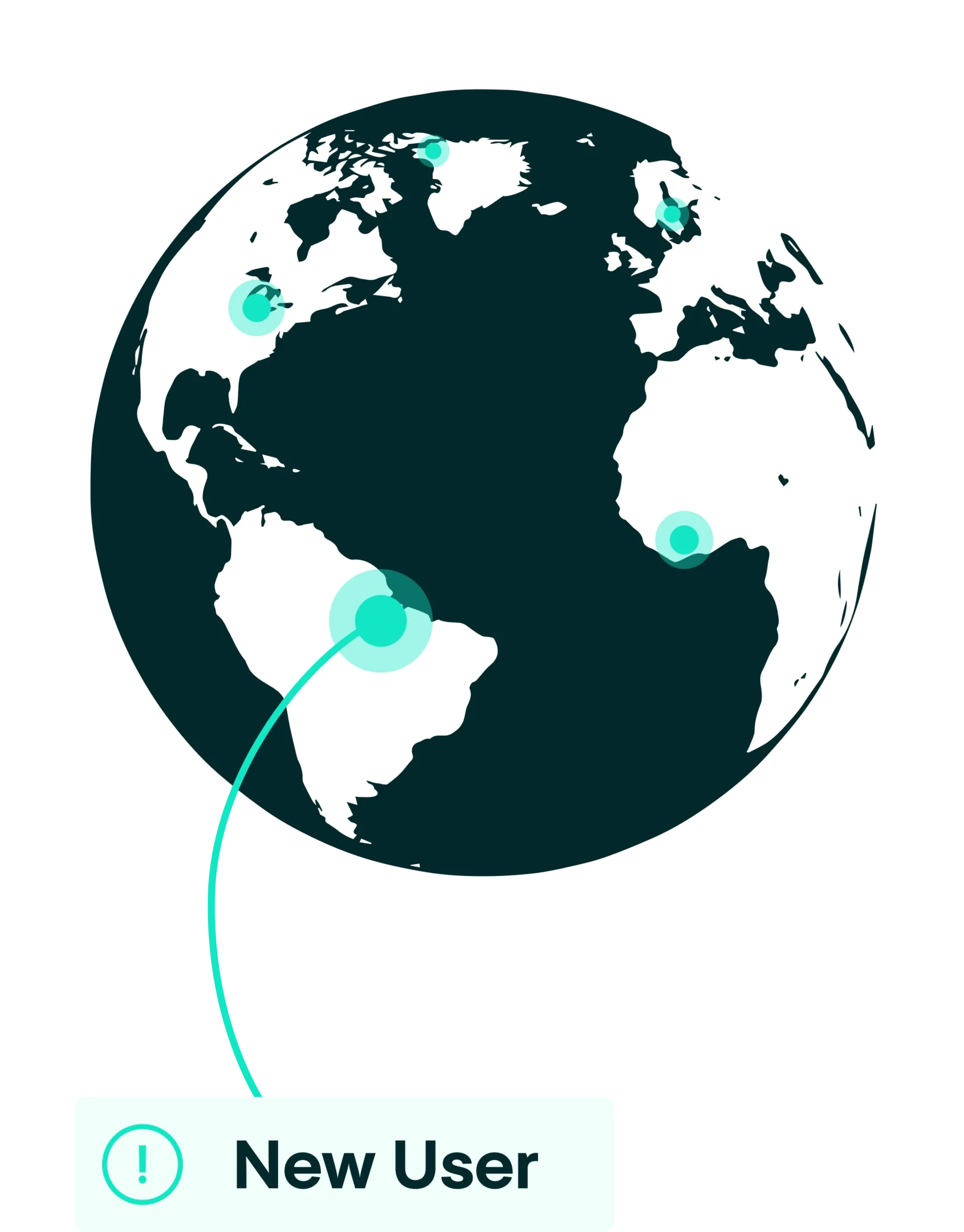
With Industry CrossLinks, we can look cross-customer, within the same industry vertical - for example, looking to see if the same fraudster has been working across our financial services customers - and the fact we work globally means we can spot evolving trends that a customer working on their own would never be aware of. All of this can happen without any personally identifiable information being shared across customers.
This is effective because fraudsters will always try to reuse their tools and tactics across multiple organizations. Even as they turn to machine learning, AI, and deepfakes, they will reuse credentials, templates, and faces. Our Industry CrossLinks capability stops them in their tracks.
CrossLinks in action:
Learn more
We have plenty of resources available for you to learn more about fraud, and how to protect your business.
Visit our dedicated Fraud Education Center here

Learn more about the threat of AI and deepfakes here
Discover the cost of fraud with our interactive RoI calculator here
Explore our fraud-prevention solutions here

Veriff is the preferred identity verification and authentication partner for the world’s biggest and best digital companies, including pioneers in fintech, crypto, gaming, and the mobility sectors. We provide advanced technology, deep insights, and expertise from our foundation in digital-first Estonia and honed in leading the digital identity revolution. The partner of choice for businesses who need to rapidly and effortlessly verify online users from anywhere in the world, Veriff delivers the broadest possible identity document coverage.
By supporting government-issued IDs from more than 230 issuing countries and territories and with our intelligent decision engine, which analyzes thousands of technological and behavioral variables, Veriff enables trust from the first hello.

Speak to one of our fraud experts today to discover how we can create customizable fraud protection for your business.