
Fraud Industry Pulse
Survey 2026

Introduction
by Ira Bondar-Mucci, Fraud Platform Lead, Veriff
Online fraud is a growing threat, with AI offering criminals a powerful new weapon. But technology also provides the tools to fight back and is helping to secure online brands and their customers for the long term.
These are some of the key findings of our Fraud Industry Pulse Survey 2026, a survey of almost 1,200 leading fraud professionals from companies across the globe. From fraud prevention to compliance, business development to customer onboarding, we sought the views of decision-makers in a range of functions - and uncovered some fascinating trends.
Perhaps most significantly, online fraud isn’t just expanding; it’s changing. Most notably, our respondents highlighted a growing danger from AI, which they now cite as one of their top fears for the future, behind only impersonation fraud.

Digitally presented media was now 300% more likely to either be entirely AI-generated or otherwise altered
This comes as no surprise. In our most recent Identity Fraud Report - an analysis of the thousands of attacks Veriff prevents every day - we found that digitally presented media was now 300% more likely to either be entirely AI-generated or otherwise altered. With AI tools now easier and cheaper for criminals to access, this only seems likely to expand as a threat in the years ahead.
But that same technology also holds huge potential in fraud prevention. Our Pulse Survey shows that four-fifths of respondents already deploy AI/machine learning to defend themselves online, Likewise, the vast majority utilize identity verification (IDV) and biometrics, driven by strong customer demand for robust fraud prevention technology.
The lesson is clear - cutting-edge fraud prevention technology is no longer optional. It is now an essential capability for any online business today. The dangers from AI-powered fraud are real and growing, but if businesses embrace the right fraud prevention tools they can protect their employees and customers and lay the foundations for enduring security.
PART 1
Key takeaways
from the data
We surveyed 1,200 fraud and compliance business decision makers from leading companies across the globe. Here’s what they said:


Online fraud is getting worse
Almost three quarters of fraud professionals (nearly 74%) have seen an increase in online fraud over the past year. The consequences are significant, with the vast majority (85%) seeing a negative financial impact.


AI is changing fraud
Most decision-makers (around 75%) saw an increase in AI-driven fraud attacks this year. Just as significantly, an even higher proportion (over 78%) expect to see this danger grow over the course of 2026; it is second only to impersonation fraud as the fraud type that professionals most fear in the coming year.


But AI can also boost security
On the other hand, almost 80% of respondents are using AI and machine learning to boost their own fraud prevention measures, seeing benefits in areas like identifying fraud patterns. Their use of the technology is bringing tangible results: for about 80% of respondents, AI has helped to stop at least some fraud.


There is growing demand for robust fraud prevention
Customers want cutting-edge fraud prevention technology, with more than three-quarters of fraud professionals pointing to growing demands for robust capabilities. They are taking steps to make this a reality: 83% already deploy IDV software and/or biometrics today, with plans underway to increase their dependence on the technology in the future.


Organizations could do more
Interestingly, it appears many fraud professionals believe fraud prevention could be an even higher priority in their organizations. Only about a third of respondents strongly agreed that fraud prevention received the appropriate level of attention from the C-suite - or that it received enough funding. At a time of increasing AI-powered danger, surely most decision-makers should have no hesitation in strongly agreeing with such statements.
Talk to one of our fraud experts, or scroll on to get more global fraud data


PART 2
Data deepdive
Q1
Has your business seen an increase in online fraud in the last 12 months?
Online fraud remains a danger for businesses around the world – and it’s getting worse. About three quarters of fraud professionals (73.87%) have seen an increase in online fraud over the past year, a stark finding that underscores the need for robust security.
Importantly, this is part of an ongoing trend. Almost the same proportion of respondents (72%) in our survey of US decision-makers last year pointed to a growth in online fraud, while it stood at 87% in 2024.
With every passing year, for the vast majority of fraud professionals, the threat from fraud grows more intense.
No matter the type of fraud that’s deployed, the damage to revenue and reputation can be severe.
Ira Bondar-Mucci
Has your business seen an increase in online fraud in the last 12 months?
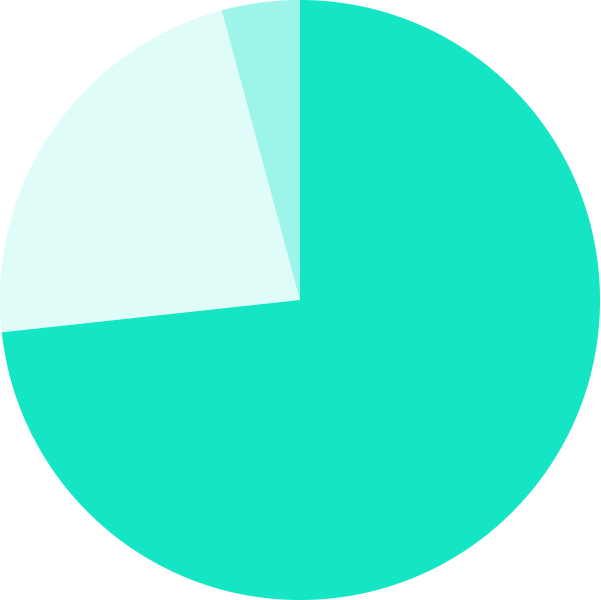
Yes
73.87%
No
22.13%
Don't know
4%
Q2
Based on your best estimate, how much of your business’s annual revenue was directly impacted by fraud in the past year?
Fraud can have devastating financial consequences for any business – and most of them are feeling the effects. In fact, the vast majority of fraud professionals (about 85%) have seen at least some negative financial impact from fraud.
This is a long-term issue, but it seems to be getting worse. Last year, our US survey found that 75.5% of respondents had seen their revenues impacted by fraud. The global survey this year found that just under half of respondents had seen an impact ranging from 3% to 9% of total revenue lost to fraud, while a substantial minority (almost 16%) had seen a revenue reduction of between 10% and 20%.
Such a loss could be a serious blow for any business, even if the damage is at the lower end of the scale. For example, a 5% loss could represent $5 million for a business with annual revenue of $100 million.
With every passing year, for the vast majority of fraud professionals, the threat from fraud grows more intense.
No matter the type of fraud that’s deployed, the damage to revenue and reputation can be severe.
Ira Bondar-Mucci
Based on your best estimate, how much of your business’s annual revenue was directly impacted by fraud in the past year?
10.81%
No
impact
19.32%
1-2%
loss
28.77%
3-5%
loss
19.66%
6-9%
loss
12.77%
10-15%
loss
3.83%
15-20%
loss
4.0%
Don't
know
0.85%
>20%
loss
Q3
What types of fraud has your business encountered most in the last 12 months?
Decision-makers experience a diverse range of threats, our survey shows. In fact, only a small minority (6.21%) of respondents were fortunate enough to have encountered no fraud at all.
It’s perhaps unsurprising that the old threat of malware retains its importance, at over 46%; it was closely followed by impersonation fraud and authorized fraud, both at about 43%, while document fraud was another common problem.
A deeper dive into the data shows some noteworthy regional variances: for instance, the landscape appears to be particularly challenging in Brazil, where just 1.67% of respondents encountered no fraud at all. Malware was a particular issue in the South American country (about 58%).
The latest data reflects our previous research. Our Pulse Survey of US fraud professionals in 2025 also placed authorized fraud, impersonation fraud, document fraud and malware in the top four. The diverse nature of the threat was also exposed by our Identity Fraud Report 2026, where we analyzed our in-house data: we found a particular threat from impersonation fraud, which made up more than 85% of the attacks we detected.
It’s vital that organizations deploy the right tools to keep their businesses and their customers safe and secure.
No matter the type of fraud that’s deployed, the damage to revenue and reputation can be severe.
Ira Bondar-Mucci
What types of fraud has your business encountered most in the last 12 months?
17.4%
17.5%
15.3%
18.9%
7.5%
7.6%
5.0%
8.1%
2.5%
0.3%
Authorized fraud (scams)
Impersonation fraud
Document fraud
Malware
Third-party coersion
Account takeover
Bonus abuse
Multi-accounting
Has not encountered any fraud
Other
Q4
Have you seen an increase in
AI-driven fraud attacks in the past 12 months?
The trend is clear: AI is transforming the nature of online fraud. Most fraud professionals (about 75%) have seen an increase in AI-driven fraud attacks over the past year. It is particularly concerning that a quarter reported a significant increase.
Again, fraud professionals in some countries appear to be grappling with an even greater challenge than their counterparts elsewhere: among our Brazilian respondents, for instance, a staggering 87% have seen at least some increase, with almost half saying the increase was significant.
The findings confirm a longer-term trend. Last year, 78% of respondents in our US Pulse Survey reported an increase in AI-driven attacks; the same figure was reported in 2024.
Veriff’s internal data uncovers the same trend. Our latest Identity Fraud Report found that digitally presented media was 300% more likely to have some AI influence in 2025 than was the case in 2024.
AI isn’t just the future of fraud. The threat is already here.
No matter the type of fraud that’s deployed, the damage to revenue and reputation can be severe.
Ira Bondar-Mucci
Have you seen an increase in AI-driven fraud attacks in the past 12 months?
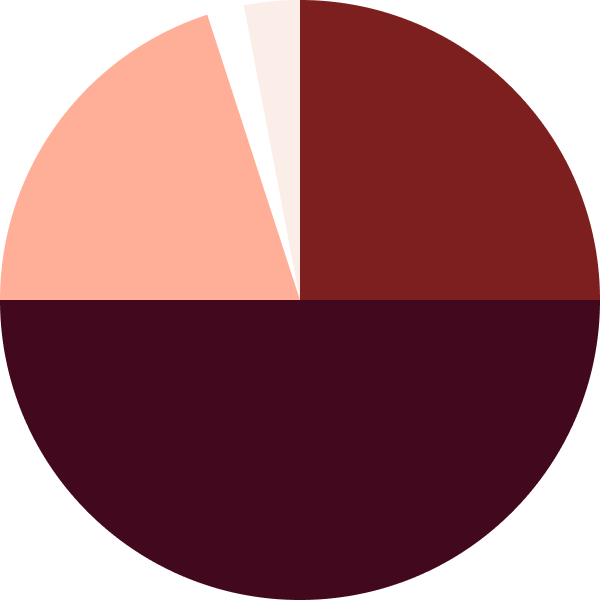
Yes, we have seen a slight increase
49.96%
No change
20.26%
No, we have seen a decrease
2.38%
Not sure
3.06%
Yes, we have seen a significant increase
24.34%
Q5
Is your business currently utilizing artificial intelligence and machine learning in its fraud prevention capabilities?
While fraud professionals have seen the negative side of AI in fueling fraud, they also see its benefits in boosting their security. The vast majority of respondents are turning to the technology to prevent fraud, with just 2.64% saying they neither use the technology now nor plan to use it in the next year.
This shows an increased enthusiasm for AI/ML when compared to last year’s US survey, when 16% of respondents said they did not use the technology.
Almost 80% of respondents this year have already taken significant steps to embrace AI, with AI-powered fraud prevention capabilities either in production or in testing. With a substantial proportion (17.87%) planning to do so in the next 12 months, it’s clear that fraud professionals see strong potential for AI-powered security.
With every passing year, for the vast majority of fraud professionals, the threat from fraud grows more intense.
No matter the type of fraud that’s deployed, the damage to revenue and reputation can be severe.
Ira Bondar-Mucci
Almost 80% of respondents this year have already taken significant steps to embrace AI
Is your business currently utilizing artificial intelligence and machine learning in its fraud prevention capabilities?
35.66%
43.83%
17.87%
2.64%
Yes, in production
Yes, in testing
No, but planning to in the next 12 months
No, and have no plans to in the next 12 months

“Providing our users with a safe and secure platform has always been a top priority at Webull, and Veriff has helped us to do so. Compared to previous partners, Veriff has been able to support us in identifying fraudulent activity accurately and effectively – even as platform user numbers climbed.”
Brendan Fuller
Chief Risk Officer, Webull

Webull Financial is a leading online brokerage platform committed to empowering self-directed investors with innovative tools and cutting-edge technology, revolutionizing the way individuals approach investing. As Webull continued to expand and grow its user numbers, combating fraud became more of a challenge due to the high volume of platform traffic. Crucially, fraudulent activity was causing deposit reversal, which resulted in revenue loss. From a compliance point of view, it was becoming increasingly difficult to accurately identify and know the individuals opening accounts on Webull’s platform.
With Veriff, Webull founda partner to provide a seamless user experience, with minimal friction, to onboard genuine customers faster - all while combating fraud.
CASE STUDY
Veriff & Webull
Helping a leading trading platform fight fraud and streamline user onboarding


As Webull continued to expand and grow its user numbers, combating fraud became more of a challenge due to the high volume of platform traffic.
Do you know the true cost of fraud on your business?

Q6
How confident are you that your organization can keep up with AI-powered fraud over the next 12 months?
Fraud experts believe they can meet the challenge from AI-powered fraud. More than 80% are either very or somewhat confident; in fact, only about 5.5% expressed a lack of confidence.
This is perhaps a reflection of the positive impact they are seeing – or expect to gain – from AI-powered fraud prevention tools, as seen in the responses to question five.
While the threat is very real, fraud professionals know that cutting-edge technology will help them beat fraudsters at their own game.
No matter the type of fraud that’s deployed, the damage to revenue and reputation can be severe.
Ira Bondar-Mucci
How confident are you that your organization can keep up with AI-powered fraud over the next 12 months?
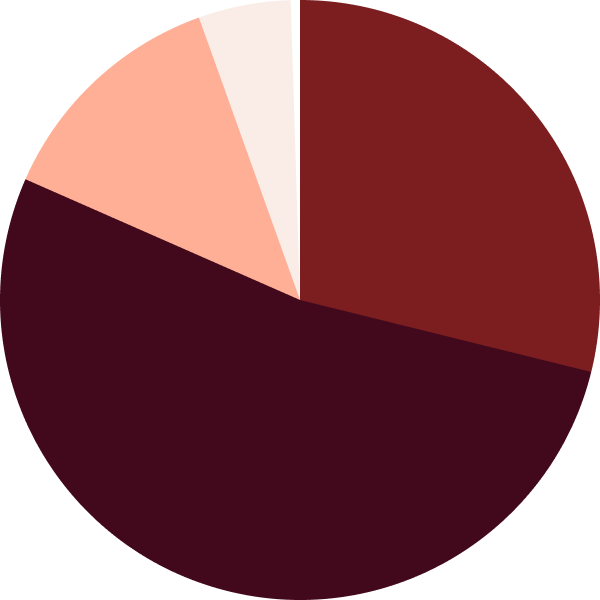
Somewhat confident
52.51%
Neutral
12.94%
Somewhat unconfident
5.02%
Very unconfident
0.51%
Very confident
29.02%
Helping a neobank go from conception to launch in under a year
Q7
Of all fraudulent customer ID verification attempts made at your business, how many used AI or deepfakes?
The impact of AI or deepfakes as a driver of fraud is clear: there is significant potential for the technology to fuel impersonation fraud, for instance, with image or video manipulation enabling a criminal to pretend to be someone they are not.
Almost 60% of respondents reported that anywhere from 11% to more than 50% of fraudulent ID verification attempts relied on AI or deepfakes. Almost a third (29.87%) said it was used in up to 10% of such attempts.
For a technology that’s still in its infancy, the prevalence of AI in such attacks is striking. This clearly points to a future where AI will be the norm in online fraud.
Ira Bondar-Mucci
But as the next question shows, AI is also a crucial part of the solution.
Of all fraudulent customer ID verification attempts made at your business, how many used AI or deepfakes?
38.47%
11-25% used deepfakes
29.87%
0-10% used deepfakes
17.7%
25-50% used deepfakes
10.38%
Don't
know
3.57%
>50% used deepfakes
Q8
How does artificial intelligence help your organization fight fraud?
As we’ve seen, more fraud professionals around the world are embracing AI and ML as key pillars of their defenses against fraud – and they have a wide range of reasons for turning to the technology.
The responses here show that fraud experts are deploying the technology across different use cases in fairly similar proportions. While the most popular choice is to identify fraud patterns and potential risk factors (43.74%), accelerating the identification of sophisticated fraud attempts (37.28%) is close behind.
Even the individual choice with the lowest responses – analyze customer behavior patterns over time to identify unusual activity – was on 30%. A similar proportion say they use AI for all these use cases combined.
No matter your specific needs, then, fraud professionals agree: AI-empowered security is a crucial tool to beat the fraudsters.
With every passing year, for the vast majority of fraud professionals, the threat from fraud grows more intense.
No matter the type of fraud that’s deployed, the damage to revenue and reputation can be severe.
Ira Bondar-Mucci
How does artificial intelligence help your organization fight fraud?
19.48%
Automate the customer verification process to perform more robust checks
21.33%
Accelerate identification of sophisticated fraud attempt
25.04%
Identity fraud patterns and potential risk factors
17.19%
Analyze customer behavior patterns over time to identify unusual activity
16.37%
All the above
0.58%
Other
Q9
Are you seeing that your business’s customers are more demanding of robust fraud prevention capabilities?
Cutting-edge fraud prevention technology isn’t a ‘nice-to-have’. In fact, it’s an absolute requirement if you want to keep your customers happy, with more than three quarters (76.77%) of fraud professionals seeing greater demands from their customers for robust fraud prevention capabilities. This was even higher than the figure recorded in our US survey last year (71.5%)
This underlines the importance of the technology in reputational terms, and therefore for the future of your business, no matter the sector involved. Again, it’s even more important in some markets than others – 90% of our Brazilian respondents have seen growing demand for such capabilities.
With every passing year, for the vast majority of fraud professionals, the threat from fraud grows more intense.
No matter the type of fraud that’s deployed, the damage to revenue and reputation can be severe.
Ira Bondar-Mucci
Are you seeing that your business’s customers are more demanding of robust fraud prevention capabilities?
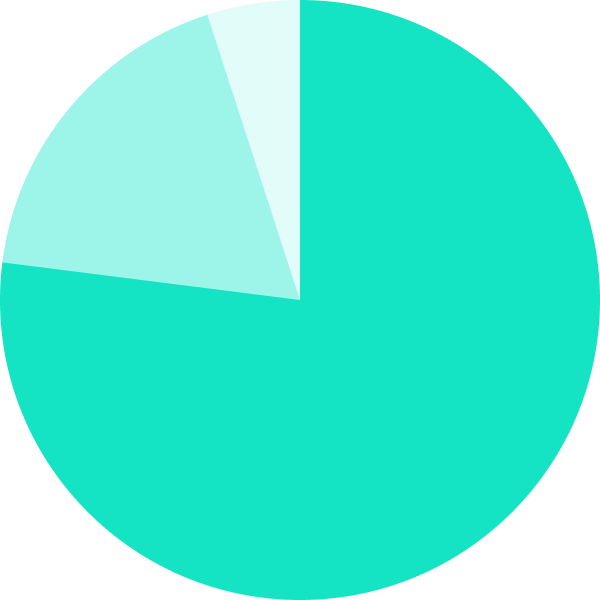
Yes
76.77%
No
17.79%
Don't know
5.45%
Q10
Who owns fraud prevention strategy at your organization?
Unsurprisingly, compliance/risk teams are the dominant owners of fraud strategy across organizations, selected by 61.7% of respondents. A significant proportion of respondents also opted for dedicated fraud leadership (35.4%).
However, the figures hold some potentially concerning signs. Just a fifth (21.02%) of respondents chose company leadership in the form of the C-Suite. When we consider the potentially damaging consequences of a successful fraud attack – financially and in terms of reputation – it seems reasonable to expect a higher proportion of the executive team to take control of fraud prevention.
Again, shared ownership seems low, on about 14%; given the wide-ranging nature of the fraud threat, there should arguably be strong involvement across the organization.
This survey has clearly highlighted a growing danger from fraud. As this trend endures in the coming years, as seems certain, we would predict that ownership will be shared cross-functionally.
Perhaps we will see ownership spread more evenly across the organization, with a particularly important role for those at the top.
No matter the type of fraud that’s deployed, the damage to revenue and reputation can be severe.
Ira Bondar-Mucci
Who owns fraud prevention strategy at your organization?
13.65%
23.00%
40.08%
11.72%
9.07%
2.32%
0.17%
C-suite (CEO / COO / CFO)
Dedicated fraud leadership
Compliance / risk team
Product / engineering
Shared ownership
No clear owner
Other
Q11
Are you utilizing customer identity verification software and/or biometrics as part of risk-based/step-up decisioning in your fraud prevention capabilities?
Fraud professionals know the benefits of IDV software and biometrics when it comes to securing their businesses and systems against the threat of fraud. About 83% of respondents already deploy the technology in their systems, and the same figure recorded last year, pointing to clear enthusiasm for the technology across industries.
This is perhaps connected to the growing acceptance of AI as an enabler in the fight against fraud because cutting-edge IDV today utilizes AI to gain an advantage over the criminals.
Because cutting-edge IDV today utilizes AI to gain an advantage over the criminals.
Ira Bondar-Mucci
Are you utilizing customer identity verification software and/or biometrics as part of risk-based/step-up decisioning in your fraud prevention capabilities?
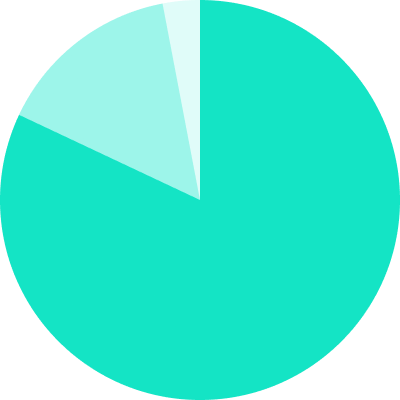
Yes
82.64%
No
14.64%
Don't know
2.72%
Want to discover how Veriff can help you combat online fraud?

Q12
Do you plan to increase your dependence on identity verification and/or biometrics in the next 12 months?
Not only are most fraud professionals embracing the power of IDV and biometrics, but they believe it will only grow in importance for their fight against the fraudsters. About 84% of respondents expect to deepen their exposure to the technology in the coming year. When combined with the fact that a similar proportion already use the technology (see question 11), it’s clear that they like what they see – and they want more.
This is a continuation of a trend we’ve tracked in previous surveys. Last year’s US Pulse Survey found that 81% of respondents planned to grow their use of IDV and biometrics, and the figure was 96% in 2024. This strong momentum is likely to continue in the coming years.
With every passing year, for the vast majority of fraud professionals, the threat from fraud grows more intense.
No matter the type of fraud that’s deployed, the damage to revenue and reputation can be severe.
Ira Bondar-Mucci
Do you plan to increase your dependence on identity verification and/or biometrics in the next 12 months?
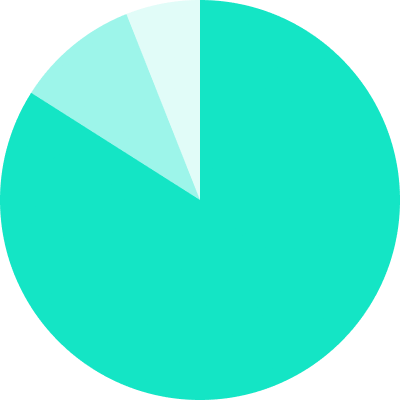
Yes
83.83%
No
9.96%
Don't know
6.21%
Q13
What is most challenging when it comes to fraud prevention?
One of the greatest dangers from online fraud is the evolving nature of the threat, something that clearly emerges from the survey. Almost 70% of respondents cited the changing nature of fraud as the most challenging aspect of fraud prevention, putting it far ahead of any other challenge.
Still, it is far from the only difficulty. Almost half of respondents pointed to the cost of solutions as a challenge, while a similar proportion highlighted the challenge of balancing fraud prevention with customer demands for ease of use.
Our 2025 US Pulse Survey highlighted the same three leading challenges in very similar proportions and only cutting-edge AI-powered IDV and biometrics can meet these demands.
Fraud prevention technologies must be designed to evolve with the threat, while being good value for money and easily utilized by consumers.
Ira Bondar-Mucci
One of the greatest dangers from online fraud is the evolving nature of the threat
What is most challenging when it comes to fraud prevention?
8.93%
22.47%
31.40%
20.30%
16.86%
0.04%
Staffing
Cost of solutions
Keeping up with the changing nature of fraud
Balancing it against customer demand for ease of use
Implementing anti-fraud solutions into our tech stack
Other

"We have been partnering with Veriff since 2020 to address identity verification and to acquire valuable additional information to integrate into our fraud controls. Fraud challenges are very dynamic, new patterns arise frequently and the existing ones change very fast, so close communication, high collaboration, and effective responsiveness between Veriff and Kueski have been critical to helping us evolve."
SVP of Credit Risk, Kueski

Kueski’s credit approval process is completely digital and fully automated, so it is of the utmost importance to balance the best user experience - based on a simple, fast, clear, and streamlined process - with secure operation. The main challenge is to verify the identity of users seamlessly and prevent fraud cases - something that Veriff was on hand to help solve.
CASE STUDY
Veriff & Kueski
Helping Latin America’s leading BNPL later platform fight fraud


Kueski is the leading buy now, pay later (BNPL) and online consumer credit platform in Latin America, and it is known for its innovative financial services.
Q14
What percentage of total ID verification attempts in your business, on average, are fraudulent each month?
The responses here show the scale of the threat posed by fraudsters today. Almost half of respondents say that an average of at least 11% of total ID verification attempts in their business are fraudulent every month; for more than a tenth of respondents, it can be 25-50% - or even more.
And it’s an ongoing trend for fraud professionals across industries. Our US Pulse Survey 2025 showed that 38% of respondents encountered such fraud in at least 11% of IDV efforts.
With every passing year, for the vast majority of fraud professionals, the threat from fraud grows more intense.
No matter the type of fraud that’s deployed, the damage to revenue and reputation can be severe.
Ira Bondar-Mucci
What percentage of total ID verification attempts in your business, on average, are fraudulent each month?
45.11%
0-10%
of attempts
37.79%
11-25%
of attempts
9.62%
25-50%
of attempts
1.53%
>50%
of attempts
5.96%
Don't
know
Q15
Approximately how much fraud does AI help your organization prevent?
While the threat is clear, decision-makers are reaping the benefits of AI-powered fraud prevention technology. Almost 80% of respondents said AI had helped stop at least some fraud for their organization. Encouragingly, more than half saw such tools help prevent at least a quarter of attacks.
The findings here are even more encouraging than 2025, when about three-quarters (74.5%) said AI had stopped at least some attacks. This trend shows that even while fraudsters embrace AI to empower their criminal behavior, organizations can use the same technology to bolster their defenses.
With every passing year, for the vast majority of fraud professionals, the threat from fraud grows more intense.
No matter the type of fraud that’s deployed, the damage to revenue and reputation can be severe.
Ira Bondar-Mucci
Approximately how much fraud does AI help your organization prevent?
2.72%
None
27.15%
1-25%
of fraud
28.68%
26-50%
of fraud
16.77%
51-75%
of fraud
6.72%
76-100%
of fraud
11.40%
We use AI, but its effectiveness is unclear
3.66%
Don't
know
2.89%
We don't use AI technology
Q16
How do you feel about the following statement: Fraud prevention receives the appropriate level of attention/prioritization at my company’s highest of levels/C-suite?
More than 85% of respondents agree to at least some extent that their organization’s leaders are prioritizing fraud prevention sufficiently. However, when we break the answers down further, there could be cause for concern.
While almost a third strongly agree with the statement, more than half (53.19%) only somewhat agree. It is concerning that most respondents did not express strong agreement, when fraud presents such a clear financial threat to online businesses today.
The results also confirm a longer-term trend. In our US survey in 2025, we found that 47% somewhat agreed with the statement, while just a third (35%) strongly agreed. As the threat continues to expand in the coming years, as seems likely, it seems reasonable for fraud professionals to seek greater engagement from the C-suite.
There are noteworthy differences here across different nations. About 40% of respondents in both the US and Brazil strongly agreed with the statement. This still placed them in the minority within their nations but meant that they showed more confidence than their counterparts in the UK, where just a quarter (24.56%) expressed strong agreement. British business leaders may need to reassess the prioritization they give to this crucial issue.
With every passing year, for the vast majority of fraud professionals, the threat from fraud grows more intense.
No matter the type of fraud that’s deployed, the damage to revenue and reputation can be severe.
Ira Bondar-Mucci
How do you feel about the following statement: Fraud prevention receives the appropriate level of attention / prioritization at my company’s highest of levels/C-suite?
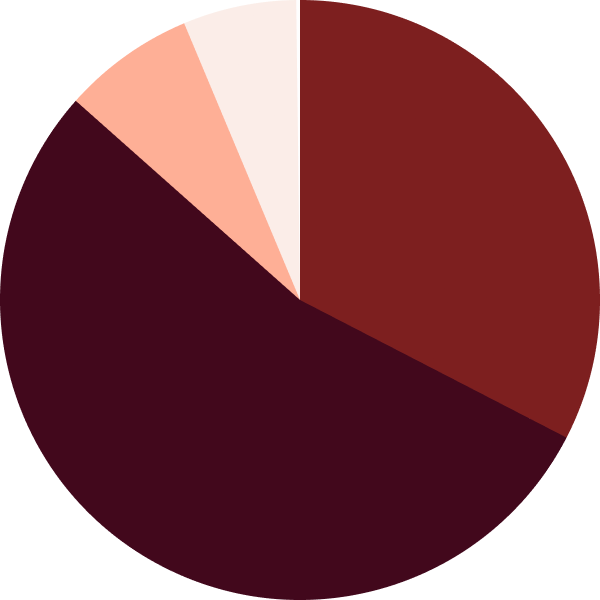
Somewhat agree
53.19%
Not sure
7.40%
Somewhat disagree
6.64%
Strongly disagree
0.17%
Strongly agree
32.60%
Q17
How do you feel about the following statement: Fraud prevention receives the appropriate level of budget allocation at my company’s highest of levels/C-suite?
Again, the answers here point to reasons for concern when it comes to the commitment to fraud prevention in the C-Suite. Less than a third of respondents (30.72%) strongly agree with the statement, while almost half (48.85%) only somewhat agree.
There also were notable national differences. While about 35% of US respondents strongly agreed – itself a surprisingly low figure – it was just a quarter in the UK and a worrying 20% in Brazil.
Still, it should be noted that only about 11% of respondents overall disagreed with the statement. That was an improvement on our US survey last year, which found that 16.5% of respondents didn’t think their firm was investing at the right level. This points to a positive trend that will hopefully gather pace in the coming years.
With every passing year, for the vast majority of fraud professionals, the threat from fraud grows more intense.
No matter the type of fraud that’s deployed, the damage to revenue and reputation can be severe.
Ira Bondar-Mucci
How do you feel about the following statement: Fraud prevention receives the appropriate level of budget allocation at my company’s highest of levels/C-suite?
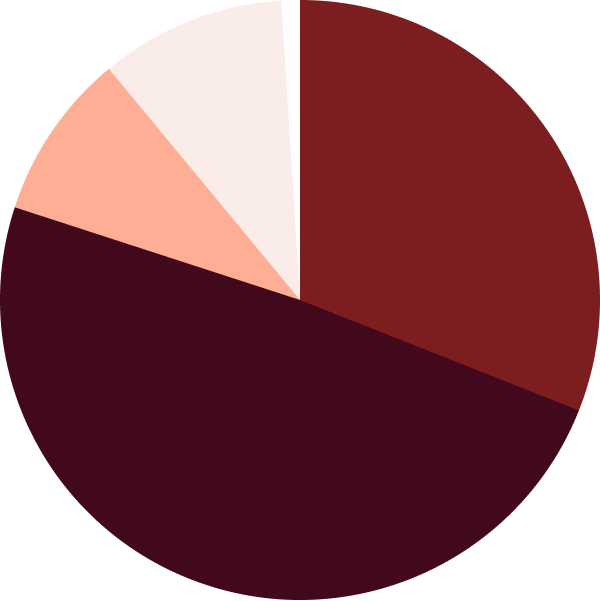
Somewhat agree
48.85%
Not sure
9.28%
Somewhat disagree
10.13%
Strongly disagree
1.02%
Strongly agree
30.72%
Talk to one of our fraud experts, or scroll on to get more global fraud data
Q18
How effective do you believe your current fraud prevention approach is?
The vast majority of respondents (more than 85%) believe their current solutions are at least somewhat effective, a positive result at a time of growing threats. Just 4% said their approach was ineffective: most fraud professionals, then, believe they have the tools at hand to at least partially address the danger from online fraud.
However, more than half of respondents said their approach was only somewhat effective and less than a third said it was very effective (28.94%). Again, this was also impacted by nationality: less than a fifth of UK respondents (19.45%) saw their approach as very effective. That was about half the proportion of US respondents who selected this answer (37.65%), perhaps suggesting that fraud professionals in the world’s leading economy have embraced effective fraud prevention technology to a high degree.
With every passing year, for the vast majority of fraud professionals, the threat from fraud grows more intense.
No matter the type of fraud that’s deployed, the damage to revenue and reputation can be severe.
Ira Bondar-Mucci
Fraud professionals in the world’s leading economy have embraced effective fraud prevention technology to a high degree
How effective do you believe your current fraud prevention approach is?
28.94%
56.51%
10.47%
3.74%
0.34%
Very effective
Somewhat effective
Neutral
Somewhat ineffective
Very ineffective
Q19
Do you anticipate seeing more online fraud in 2026?
More than four-fifths of respondents (82.47%) expect online fraud to increase across the course of 2026. The result here is unsurprising, given the strong evidence of growing fraud that we’ve seen throughout the survey.
It’s also part of an ongoing trend: our US Pulse Survey last year found that 90% of respondents expected fraud to grow. The findings highlighted in this year’s survey show just how right they were.
It is reasonable to expect the fears for 2026 to be proven correct as well. This underscores the need to bolster defenses and treat the danger with the prioritization it deserves.
With every passing year, for the vast majority of fraud professionals, the threat from fraud grows more intense.
No matter the type of fraud that’s deployed, the damage to revenue and reputation can be severe.
Ira Bondar-Mucci
Do you anticipate seeing more online fraud in 2026?
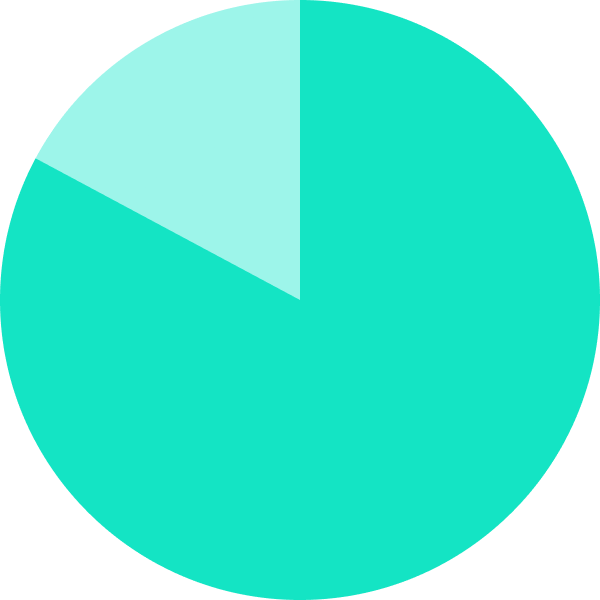
Yes
82.47%
No
17.53%
Q20
Do you anticipate seeing more AI and deepfake-powered fraud in 2026?
Fraud professionals expect AI to continue its advance. More than 78% expect it to grow, with a further 11.4% believing it will stay the same. Just 8% answered no.
As we’ve seen, Veriff’s analysis of our in-house data – as presented in our Fraud Report 2026 – showed that digitally presented media today is 300% likelier to have some impact from AI, whether it’s completely AI-generated or otherwise altered.
The story is clear: AI is a game-changer for fraudsters, and it’s only going to get worse. But by adopting the same technology themselves, fraud professionals can fight back.
With every passing year, for the vast majority of fraud professionals, the threat from fraud grows more intense.
No matter the type of fraud that’s deployed, the damage to revenue and reputation can be severe.
Ira Bondar-Mucci
Do you anticipate seeing more AI and deepfake-powered fraud in 2026?
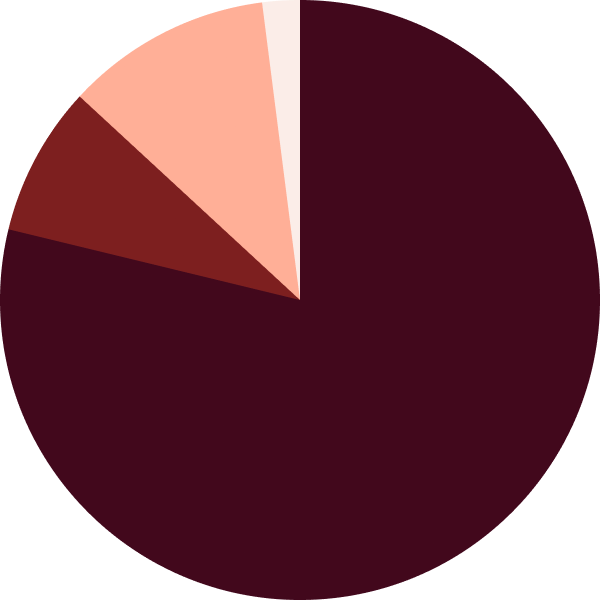
Yes
78.13%
We expect to see the same level
11.40%
Don't know
2.47%
No
8%
"Today, as a result of the partnership, we experience an almost zero abandonment rate, and the customer service that we’ve received from Veriff has been exceptional, too."
Bonnie Juett,
VP Head of Operations Projects, Crown Agents Bank.

Crown Agents Bank is a UK-regulated bank that has existed for around 190 years. Its aim is to transform the way payments and FX move through emerging markets, reducing friction so that more money gets to those who need it.
The solutions that Crown Agents Bank provides to their pension clients is pension payroll services – and in particular international pension payroll. Historically, this has entailed pension funds sending out manual forms. Pensioners would then be asked to complete the forms, sign them, gain third-party attestation from a notary of sorts, and then post the forms back to either Crown Agents Bank or the fund directly.
This worked as a solution for many years, but Crown Agents Bank recognized that today, there’s technology in place that can better serve those pension funds and give them a higher level of assurance - and that’s why they turned to Veriff’s biometric solutions.
CASE STUDY
Veriff & Crown Agents Bank
A digital solution with the human touch


Crown Agents Bank is a UK-regulated bank that has existed for around 190 years.
Q21
Looking ahead to the next 12 months, how would you summarize your organization’s fraud prevention capabilities?
For most fraud decision-makers (a combined 83%), their organizations are at least somewhat prepared when it comes to fraud prevention in the coming year. That’s a positive sign, as is the fact that only about 1% say they aren’t prepared and face a considerable risk of attack.
Still, there are some worrying signs in the data. More than half of respondents say they are only somewhat prepared, though believe they face little risk of attack. This contrasts with the third of respondents who say they are as prepared as they can be. But in an age of an evolving, AI-driven threat, can any online business truly have total certainty that it’s safe from attacks?
There does seem to have been something of an improvement over the past year, however: in our US Pulse Survey last year, only 18% said they were as prepared as they could be, almost half the proportion this year in the global survey (32.34%). This suggests that more and more fraud professionals are embracing the tools they need to tackle online fraud
With every passing year, for the vast majority of fraud professionals, the threat from fraud grows more intense.
No matter the type of fraud that’s deployed, the damage to revenue and reputation can be severe.
Ira Bondar-Mucci
Looking ahead to the next 12 months, how would you summarize your organization’s fraud prevention capabilities?
32.34%
We are as prepared as we can be and face little risk of attack
50.81%
We are somewhat prepared but face little risk of attack
7.91%
We are underprepared and face risk of attack
1.11%
We are not prepared and face a considerable risk of attack
7.83%
We are constantly evolving our prevention capabilities and face considerable risk of attack
Q22
What fraud type do you fear the most in 2026?
We’ve already seen how in the past year, authorized fraud, impersonation fraud, document fraud and malware were serious problems for our respondents. It’s no surprise, then, that the same threats dominate fears for the coming year.
But they’re not the only causes for concern. In fact, AI-powered fraud is now right up there when it comes to future fears, selected by the same proportion of respondents as malware (both on 45.62%). That places it second only to impersonation fraud.
AI is fast becoming a crucial driver of online fraud, and it’s only going to get worse. The good news is that fraud professionals see the danger, and as the survey shows, are embracing the AI-powered IDV technology they need to fight back.
The good news is that fraud professionals see the danger, and as the survey shows, are embracing the AI-powered IDV technology they need to fight back.
Ira Bondar-Mucci
The same threats dominate fears for the coming year
What fraud type do you fear the most in 2026?
13.83%
17.25%
13.10%
15.13%
6.15%
10.45%
2.94%
5.51%
15.13%
0.06%
0.45%
Authorized fraud (scams)
Impersonation fraud
Document fraud
Malware
Third-party coersion
Account takeover
Bonus abuse
Multi-accounting
AI-powered fraud
Other
None of the above
Talk to one of our experts today to supercharge your fraud prevention

PART 3
What the future holds
How Veriff can help you fight the AI threat

Technology to identify manipulated images
1

Biometric analysis of photographs and videos
2

The ability to identify patterns across verifications and customers
3

Examination of key device attributes
4
Veriff’s platform is built on sophisticated models that constantly evolve, providing a multi-layered approach that combines threat-mitigation tools. We treat the absence of data as a risk factor itself and provide a robust and comprehensive check of identity documents.
We treat the absence of data as a risk factor itself and provide a robust and comprehensive check of identity documents.
Ira Bondar-Mucci
The fraud prevention ecosystem
Veriff is building the infrastructure for trust online. We are doing this by helping digital organizations to do the following three things:

Comply with regulations

Fight ever-more sophisticated fraud

Achieve growth on a global scale
To do these three things, businesses must ask three key questions of their customers:
Is this person real at the moment of signing up for an account?
Is this person trusted - are they a potential fraud risk or are they a high-value customer?
Is this still the same real and trusted person logging in throughout the lifetime of that account?
The customer identity solution built to answer those three key questions facing businesses
Veriff is uniquely placed because we have the ability to provide positive answers to the challenges facing global businesses
Our IDV solution verifies users at the point of sign-up to your systems, confirming they are genuine. Our cross-linking and risk scores create a powerful network effect from across our customer base that enables you to determine whether a customer is to be trusted. And our Biometric Authentication solution enables you to ensure the returning user is still the genuine owner of the account throughout that account’s lifespan.

Preparing you for the rise of deepfakes
We have been seeing deepfakes for a couple of years already in our customers’ sessions. With the recent generative AI boom, we can see more and more of these kinds of sessions coming in, where the images have been generated with AI. We take a multi-layered approach to combating deepfakes and AI-generated media.
One key strategy is implementing face liveness checks to validate the authenticity of human presence. This involves using algorithms to detect subtle facial movements and responses, ensuring that the individual interacting with our systems is indeed real.
In addition, we employ a variety of checks to validate the legitimacy of documents. This includes leveraging machine learning algorithms to analyze document features and detect anomalies or signs of manipulation, as well as our proprietary document specimen database populated by document experts.

Human thought behind the machine learning
Veriff uses machine learning to detect patterns or anomalies that identify fraud, including those created with deepfakes. This could involve detecting inconsistencies in facial features, skin texture, or lighting conditions. But even with advanced AI, some deepfakes might be sophisticated enough to fool automated systems. Having trained professionals in our human-in-the-loop review helps us to provide an extra layer of security.
By combining these techniques with ongoing research and development, we aim to stay one step ahead of emerging fraud techniques and safeguard our systems and users against potential threats.
How we do it
Fraud Protect
Our core Document and Identity Verification solution uses advanced AI and is supported by fraud mitigation tools. We deploy machine learning-powered checks, advanced fraud network mitigation strategies, and a team of in-house counter-fraud experts to help protect organizations.
Meanwhile, our Fraud Protect solution helps to identify patterns and deliver actionable insight built on industry expertise, enabling users to approve greater numbers of genuine users and eliminate more fraud. Its elements are:

DocCheck
Which searches for signs of physical or digital data or structural manipulation.
DeviceCheck
Which collects and analyzes multiple signals from the user’s device and network to identify potential risk.
FaceBlock
This prevents individuals suspected of fraud from attempting to access your business.
FaceCheck
Offers biometric analysis of the user’s selfie image for signs of physical or digital manipulation.
CrossLinks and
RiskScore
CrossLinks and RiskScore techniques are something we utilize across our portfolio to build a comprehensive picture of fraud-related danger, including the risks from deepfakes (see below for more detail).
FaceCheck
Liveness
Analyzing the biometric characteristics from a submitted selfie image to ensure that the subject is real and physically present during the verification, as well as checking for signs of manipulation.
Crosslinks
Our CrossLinks approach - where we are crosslinking multiple pieces of information to derive new insights and fraudulent patterns that are not detectable when analyzing a single session in isolation - means we can group together verifications with similar data points, helping us to identify fraudsters who might use multiple fake identities on different occasions across our network.
This capability has deepened and expanded. We have long been capable of identifying a document that shows up on multiple occasions with the same customer, or the same biometrics, IP address, or device characteristics.
With Industry CrossLinks, we can look cross-customer, within the same industry vertical - for example, looking to see if the same fraudster has been working across our financial services customers - and the fact we work globally means we can spot evolving trends that a customer working on their own would never be aware of. All of this can happen without any personally identifiable information being shared across customers.
This is effective because fraudsters will always try to reuse their tools and tactics across multiple organizations. Even as they turn to machine learning, AI, and deepfakes, they will reuse credentials, templates, and faces. Our Industry CrossLinks capability stops them in their tracks.
Crosslinks in Action
Learn more
We have plenty of resources available for you to learn more about fraud, and how to protect your business.
About Veriff
Veriff is the preferred identity verification and authentication partner for the world’s biggest and best digital companies, including pioneers in fintech, crypto, gaming, and the mobility sectors. We provide advanced technology, deep insights, and expertise from our foundation in digital-first Estonia and honed in leading the digital identity revolution. The partner of choice for businesses who need to rapidly and effortlessly verify online users from anywhere in the world, Veriff delivers the broadest possible identity document coverage.
By supporting government-issued IDs from more than 230 issuing countries and territories and with our intelligent decision engine, which analyzes thousands of technological and behavioral variables, Veriff enables trust from the first hello.

Trusted by 4,000+ companies






Speak to one of our fraud experts today to discover how we can create customizable fraud protection for your business.